PIVND hands-on guide · Independently tested by PIVND Editorial

Good Sort Master: Triple Match hands-on review

The useful twist here is not simply finding three matching groceries; it is reserving enough shelf space to assemble those triples without blocking later moves. The opening board is calm and small, making it a suitable introduction to order-of-operations puzzles rather than a reflex challenge.

Tested in browser
2026-08-12
What we checked
Launch, controls, opening play, and visible systems
Review by
PIVND Editorial
Good Sort Master: Triple Match

A first-board review of Good Sort Master: Triple Match, with verified shelf rules, space-management advice, controls, limitations, and a comparison with a true 3D obstruction puzzle.

Use your mouse to play
Good Sort Master: Triple Match

The third-party game loads only after you choose to play.

Good Sort Master: Triple Match

PIVND hands-on guide · Full test record

What happened in our browser check

Tested 2026-08-12 by PIVND Editorial

We opened Level 1, dragged groceries between shelf spaces, formed a three-item match, cleared objects, and checked whether the introductory board imposed a timer.

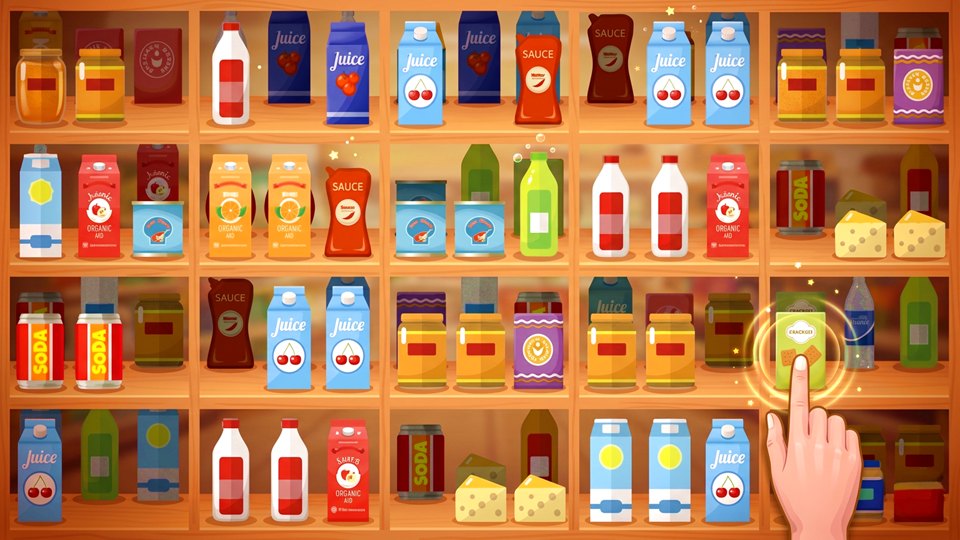
We opened Level 1 and confirmed the shelf-based triple-match layout: items are dragged between shelf spaces and three identical objects clear together. The first board used groceries including apples, cheese, and drink cartons. The opening grid is deliberately small, making free shelf spaces the main constraint rather than a timer.

  • Three identical items clear together only after they have been brought onto the same shelf; visual similarity elsewhere on the board is not enough.
  • The opening grid had no active timer during our check, so free-space planning—not speed—was the first meaningful constraint.
  • The small Level 1 layout teaches the storage rule clearly, but it does not yet demonstrate how varied later object sets or obstacles become.
Good Sort Master: Triple Match gameplay captured during the PIVND browser check
The captured first board shows the grocery set and the limited shelf spaces that drive the triple-matching decisions.

How it works

The actual play loop

Objects begin arranged across a compact shelving grid. The player drags an item into an available shelf position and clears a set when three identical objects share the same shelf. Because unmatched pieces occupy limited storage, a convenient move can create a later bottleneck. The first board uses familiar grocery shapes such as apples, cheese, and drink cartons, which makes matching readable while attention stays on freeing space in a workable order.

Input check

Controls we reviewed

Desktop
Click and drag an item into an open shelf position. Release only when the target space is visually clear.
Mobile
Drag with one finger between shelf spaces. Short, deliberate movements reduce accidental placement on a neighboring slot.

From the test

Practical tips

  1. Before moving a single item, identify one complete triple and the shelf that can hold all three pieces.
  2. Avoid filling the last open space with an item whose partners are still buried behind other objects.
  3. Clear a nearly complete triple before starting a second color or object family; parallel partial sets consume the useful buffer.
  4. Use recognizable silhouettes, not just color, when cartons or packages share a similar palette.

What works

Strengths

  • The opening rule is easy to understand without lengthy instructions.
  • No first-level timer allows deliberate planning.
  • Every cleared triple immediately changes the available workspace.

Before you start

Limitations

  • The introductory board is too small to prove long-term puzzle variety.
  • Repeated grocery objects may feel visually familiar rather than distinctive.
  • Dragging errors are more costly when only one shelf space remains.

Play this if…

Best for players who want a low-pressure sorting puzzle where careful sequencing and temporary storage matter more than fast reactions.

Skip this if…

Skip it if you want free rotation of a 3D structure, a competitive score chase, or a puzzle whose challenge is dominated by a timer.

A useful alternative

Good Sort Master: Triple Match or Tap 3D Wood Block Away?

Good Sort Master manages matching sets and scarce shelf slots on a front-facing board. Tap 3D Wood Block Away asks you to rotate a structure and read which arrowed blocks have a clear physical exit.

Read our Tap 3D Wood Block Away test guide

Source, independence, and advertising

The playable game and cover artwork are delivered by Playgama. PIVND wrote the surrounding review from its recorded browser check and is not the game's developer or publisher.

The site owner has confirmed the current provider use. This records the owner's position; it is not presented as an independent legal opinion.

Playgama may show provider-controlled advertising after a visitor starts the game. PIVND advertising remains disabled and is reviewed separately.

Editorial version: 2026-08-13. Live game details can change after our check.

About the playable Good Sort Master: Triple Match build

A first-board review of Good Sort Master: Triple Match, with verified shelf rules, space-management advice, controls, limitations, and a comparison with a true 3D obstruction puzzle.