







Ragdoll Crash-Test: Throw and Break! Review
Ragdoll Crash-Test: Throw and Break! turns ragdoll damage into a quick physics puzzle. It is crude, readable, and better when you stop flinging wildly.
Setup time
The game gets to the point quickly. There is no fussy tutorial wall, no menu maze, and no dramatic preamble. You drag the ragdoll, choose an object or angle of impact, then watch the collision system decide how badly the stickman suffers. The portrait-first screen orientation suits the short-session design, especially on a phone, where the aiming gesture feels natural.
First checkpoint
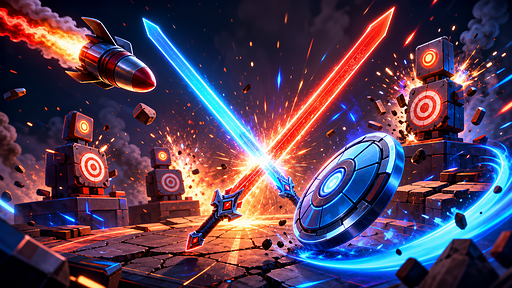
The first useful lesson is that brute force is only part of the job. A clean launch into a hard object can be less productive than a messier hit that sends the body bouncing through multiple hazards. That gives the early levels a decent experimental rhythm. You test an object, notice how it reacts, then try to chain impacts with a little more intent.
Longer-session checkpoint
After a longer run, the appeal becomes more mechanical than shocking. The stickman damage is exaggerated, but the real hook is reading weight, bounce, and contact points. Some props feel satisfyingly distinct, while others blur together more than they should. The game has 19,438,037 plays in the available catalog signal, which tracks with how instantly understandable it is.
What annoyed us
The repetition does show. Once you understand the best way to farm damage from a layout, a few stages feel like minor rearrangements rather than fresh problems. The feedback could also be clearer about why one crash scores better than another. Watching chaos is amusing; understanding the scoring would make it sharper.
Final read
Ragdoll Crash-Test: Throw and Break! works because it keeps the controls simple and lets the physics carry most of the personality. It is a little crude and occasionally too similar from attempt to attempt, but the quick restart loop gives it enough bite for short bursts.
What works well
- Drag-based throwing is immediate and easy to understand on touchscreens.
- Physics reactions create readable cause-and-effect rather than pure randomness.
- Object variety gives players reasons to experiment with different impact routes.
What to know
- Some stages start to feel like rearranged versions of the same crash puzzle.
- Scoring feedback is too vague when similar throws produce different results.
Tips
- Use the drag system to aim for secondary rebounds, not just the first hit.
- Test each smashable object once before committing to a high-damage route.
- Look for prop chains that keep the ragdoll moving after the first collision.
- Adjust launch height when a direct throw keeps wasting momentum.
Verdict
This is a lean browser crash toy with enough physics judgment to avoid feeling completely mindless. It is best in short sessions, where the blunt humor and fast retries stay fresh. Play it for the satisfying impacts, not for depth or polish, and it does its job with only a few bruises to the design.
FAQ
Yes. PIVND.com keeps this as a browser action game page with the playable frame, control notes, device context, and related games in one place.
Check the control note first: Drag the stickman onto the selected objects and watch the chaos unfold.. That is the quickest way to decide whether the game fits your device and patience level.
desktop and mobile browsers are both represented. If the controls feel cramped, switch devices or use the related-game links to find a better match.