PIVND game guide · Recorded notes and editorial analysis
Backgammon standard-rules tutorial
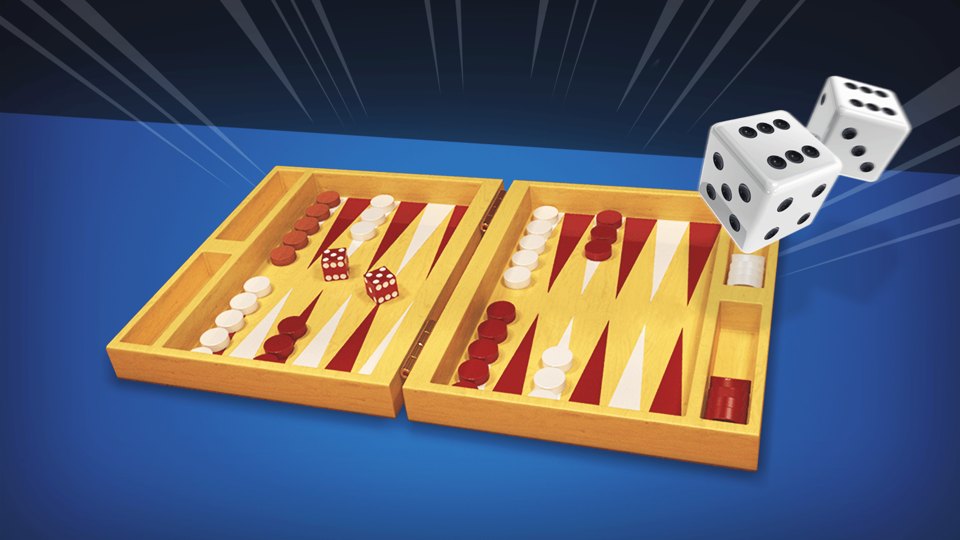
Game cover · Source: Playgama
This page is a standard-rules tutorial, not an implementation review. Use the numbered position below to understand why equal dice totals can leave different risks. The linked Playgama game is credited to CodeThisLab; its current input, language, and online service are not independently verified.
Opens Playgama in a new tab. Its advertising, privacy rules, and game availability apply there.
How it works
Gameplay structure
In standard backgammon, each die supplies a separate move, doubles supply four moves, and an opposing point with two or more checkers is blocked. A lone opposing checker can be hit and sent to the bar; pieces on the bar must re-enter before other pieces move. Bearing off begins after all your pieces enter your home board. These are standard-rule explanations rather than a verification of this implementation. Before relying on them, inspect the provider’s variant and tutorial: a menu labeled Backgammon does not establish doubling-cube support, match scoring, timers, or matchmaking availability.
Input check
Controls and input guidance
Reading the teaching diagram
Point numbers decrease toward your home board (points 1–6). The panel shows only points 8–1 and three of your checkers; omitted pieces and the opposing position are not specified.
Using the linked implementation
Inspect its tutorial for checker selection, turn confirmation, and undo. Language, local-play setup, and online opponent availability are not verified by this rule lesson.
Editorial suggestions
Practical tips
Identify the rules variant before applying standard advice about hitting, the bar, or bearing off.
Plan both dice together; the first legal move can prevent a stronger second move.
Count exposed single checkers and possible opposing replies before choosing a hit.
Check the language and local-play setup before inviting another person; online availability is not confirmed.
Focused lesson · source and reasoning
Read a 3-and-1 roll: make a point or leave three blots?
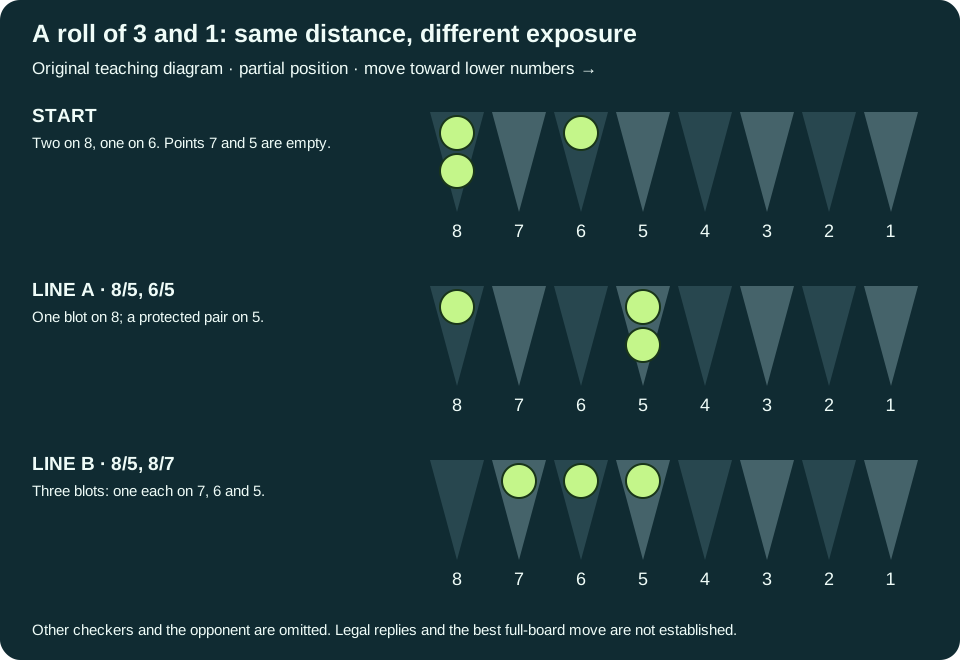
Begin with two of your checkers on point 8 and one on point 6; points 7 and 5 are empty and you have none on the bar. Compare two candidate sequences for a roll of 3 and 1. This exercise assumes both are legal in the full position. It illustrates checker safety rather than a complete game or an optimal move search.
In line A, move 8 to 5 using the 3, then 6 to 5 using the 1. You finish with one checker on 8 and two on 5. In line B, move 8 to 5 using the 3, then the other checker from 8 to 7 using the 1. You finish with single checkers on 7, 6, and 5. Both advance four pips, but A leaves one exposed checker while B leaves three.
Under standard rules, a pair makes a point that an opponent cannot land on; a single checker is a blot that can be hit. Counting pips alone therefore misses the safety difference. This is not a claim that line A must win: the opponent’s checkers, reachable hits, blocking needs, and other legal moves are omitted. Before applying the lesson to the linked game, check that it uses standard hitting and bar-entry rules.
Original PIVND teaching diagram, not a screenshot. Partial position: only your three relevant checkers and points 8–1 are shown; movement is toward lower numbers.
Line A: 8/5, 6/5
Point 5 holds a pair; point 8 holds one blot. Four pips advanced.
Line B: 8/5, 8/7
Points 7, 6, and 5 each hold one blot. The same four pips advanced.
Worked decision · editorial reasoning
A decision to make before your next move
Situation: Standard-rules practice position, separate from the diagram above: one of your checkers is on the bar, you roll 3 and 1, opponent point 22 is blocked by two opposing checkers, and points 24 and 21 are empty. Point numbers follow your movement toward point 1.
What to consider: Use the 1 to enter from the bar onto point 24 first. One possible continuation is 24/21 using the 3, assuming no additional rule constraint. You cannot use the 3 to enter onto blocked point 22.
Why: A checker on the bar must re-enter before you move other checkers. Each die is a separate step: adding 3 + 1 does not permit a direct jump from the bar to point 21 over a blocked entry. Once the checker has entered legally, use the other die if a legal move is available. This is a constructed standard-rules exercise, not a record of the linked implementation.
This example explains the documented rules; it is not a new measured play session.
Play this if…
Readers interested in standard backgammon decisions who can check the current implementation and language on the provider site.
Skip this if…
Choose another game if you require guaranteed English menus, verified online opponents, or deterministic play without dice.
A useful alternative
Backgammon or Basketball Stars?
Standard backgammon allows a pause to compare dice-limited choices. Basketball Stars’ historical notes describe continuous movement and shared-keyboard play. Choose between taking turns to reason about a position and reacting in real time; neither page establishes a current online matchmaking guarantee.
Basis: standard backgammon rules, an original constructed teaching diagram, and provider identification. The diagram is not a game screenshot. The identity-unconfirmed menu has been removed; it does not demonstrate checker movement or a played match. Earlier match claims are withdrawn. Standard rules are explained separately from the current provider implementation.
Record boundary: Removed the identity-unconfirmed localized menu from article and cards. It does not demonstrate the current implementation or a played match. Replaced it with an original, labeled standard-rules teaching diagram; this is not gameplay evidence. Earlier gameplay claims have not been independently reverified and are withdrawn from the current article. Browser version, device model, and measured session duration were not recorded.
A roll of 3 and 1 supplies two separate moves; equal total distance does not imply equal checker safety.
Two checkers on a point block an opposing landing, while a single checker remains vulnerable to a hit.
A checker on the bar must re-enter before other checkers move, so a hit can change the next turn’s priorities.
Source, independence, and advertising
The game’s recorded provider is Playgama. PIVND supplies the editorial analysis. The dated scope above identifies historical notes, supplier information, and any retained capture. PIVND is not the game's developer or publisher.
Available games open on the official Playgama website in a new tab. PIVND does not embed games or load their advertising. The provider’s privacy and advertising rules apply on its site. See our content sources and review method for source and evidence boundaries.
Editorial version: 2026-10-20. Live game details can differ from the dated sources above.
Review revision history
Checked source-supported mechanics, corrected unsupported details, and moved extended evidence notes behind the practical guide. No new gameplay session is claimed.
Originally published as a guide attributed to August 12 browser notes; later corrections and evidence limits are recorded below.
Added a structured evidence disclosure and revision record; this was an editorial audit, not a new gameplay session.
Removed embedded play in favor of provider-page links and aligned the content label with its evidence basis. This is not a new gameplay test.
Attributed surviving written notes explicitly and separated reported actions from independently visible screenshot evidence. No new play session is claimed.
Condensed repeated review sections and added a labeled editorial decision example. This is a content edit, not a new play session.
Added a targeted mode-selection, café-progression, or standard-rules lesson with explicit source boundaries; no new gameplay test is claimed.
Removed the identity-unconfirmed localized menu from article and cards. It does not demonstrate the current implementation or a played match. Replaced it with an original, labeled standard-rules teaching diagram; this is not gameplay evidence.
About this Backgammon guide
A standard backgammon rule tutorial with an original numbered position diagram, two complete 3-and-1 move sequences, and a clear boundary between rule teaching and the linked game.