









Okay
Okay
97%
1886Votes

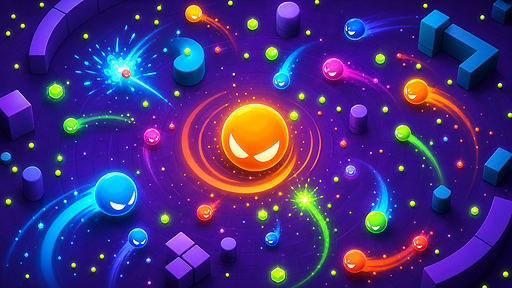
Okay? is a minimalist puzzle game that turns simple shapes into clever challenges. Every level is made of blocks, lines, and objects placed on a clean, abstract screen. Your goal is simple: clear all the objects with just one perfect move. Draw a line with your finger, release it, and watch it bounce around the screen. If your move is right, the line will hit and remove every object until the screen is empty. Sounds easy? As levels go up, the puzzles get smarter, requiring perfect angles, timing, and logic.

Use your mouse to play

Okay

97%
1886Votes

Okay? is a minimalist puzzle game that turns simple shapes into clever challenges. Every level is made of blocks, lines, and objects placed on a clean, abstract screen. Your goal is simple: clear all the objects with just one perfect move. Draw a line with your finger, release it, and watch it bounce around the screen. If your move is right, the line will hit and remove every object until the screen is empty. Sounds easy? As levels go up, the puzzles get smarter, requiring perfect angles, timing, and logic.

Game features

Play read: Players who dislike trial-and-error angle puzzles may need patience Browse context: Okay helps round out the puzzle and strategy game shelf by giving players a distinct page to compare with puzzle, strategy games; page clue: One Move, Many Possibilities Okay is built around an elegant restriction: clear the whole screen with one line. Device check: Your goal is to clear all the elements (lines, blocks, etc.) from the board. If the input feels cramped, keep the device badge in mind when switching screens and use this detail as context: Adjust slightly after each miss instead of changing the whole idea. Device and pacing note: Okay is worth checking on both desktop and mobile, especially because Adjust slightly after each miss instead of changing the whole idea. Comparison cue: Your goal is simple: clear all the objects with just one perfect move.

Controls

Your goal is to clear all the elements (lines, blocks, etc.) from the board. You draw a line (with your finger / touch) starting from somewhere, and that line interacts with the elements on screen. The drawn line will “pop” or hit the elements, making them disappear (“clear all the elements”) if done correctly. There are many levels, increasingly challenging. Some puzzles are simple; others require more precise dragging, angles, and timing.

Recommendation

Okay is a good puzzle and strategy game candidate when this note sounds like the session you want: Players who dislike trial-and-error angle puzzles may need patience Start by checking the input style: Your goal is to clear all the elements (lines, blocks, etc.) from the board. If that control setup feels awkward, check the first control prompt before launching while using this page-specific note as the tie-breaker: Adjust slightly after each miss instead of changing the whole idea. Okay is worth checking on both desktop and mobile, especially because Your goal is simple: clear all the objects with just one perfect move.

Okay Review: Minimalist One-Line Puzzles With Perfect Angles

Okay is a clean physics puzzle where one drawn line must bounce through the board and clear every object with the right angle, timing, and logic.

One Move, Many Possibilities

Okay is built around an elegant restriction: clear the whole screen with one line. You draw, release, and watch the line bounce through blocks, lines, or shapes. If the angle is correct, every object disappears. If the angle is slightly off, one stubborn piece remains and the solution has to be reconsidered.

Why Minimalism Helps

The presentation is spare, which lets the puzzle design stand out. There are no unnecessary distractions, so your attention stays on geometry. Each level becomes a small study in reflection, spacing, and cause-and-effect. The clean look also makes failure feel fair because you can usually see why the line missed.

How to Solve Better

The key is to think about the final bounce, not only the first hit. Many levels require the line to strike objects in a particular order. A powerful opening angle may look good but fail later. Strong play means visualizing the full path before release and making tiny adjustments until the one perfect move appears.

What works well

  • One-line rule creates elegant puzzle pressure
  • Minimal visuals keep geometry readable
  • Increasing difficulty rewards careful angle adjustment

What to know

  • Some levels require precise dragging
  • Players who dislike trial-and-error angle puzzles may need patience

Tips

  • Plan the last object hit before drawing the line.
  • Use shallow angles when a level needs several bounces.
  • Adjust slightly after each miss instead of changing the whole idea.

Verdict

Okay is a smart minimalist puzzle that turns a single drawn line into a satisfying test of geometry and patience.

FAQ

Can I play Okay in the browser on PIVND.com?

Yes. PIVND.com keeps this as a browser puzzle and strategy game page with the playable frame, control notes, device context, and related games in one place.

What should I check before playing Okay?

Check the control note first: Your goal is to clear all the elements (lines, blocks, etc.) from the board.. That is the quickest way to decide whether the game fits your device and patience level.

Is Okay better on desktop or mobile?

desktop and mobile browsers are both represented. If the controls feel cramped, switch devices or use the related-game links to find a better match.